
Among Sensex firms, Bajaj Finserv, Tata Steel, Sun Pharma, Tech Mahindra, Bajaj Finance, NTPC, Nestle, Tata Motors, Hindustan Unilever and Mahindra & Mahindra were the biggest gainers. IndusInd Bank, Kotak Mahindra Bank, Power Grid and ITC were among the laggards.

From the Sensex firms, Reliance Industries, Tech Mahindra, Eternal, HCL Tech, Infosys, IndusInd Bank, Tata Consultancy Services and Bajaj Finserv were the biggest gainers. In contrast, UltraTech Cement, Sun Pharma, Power Grid, NTPC, Kotak Mahindra Bank and Mahindra & Mahindra were among the laggards.

The implication of April 2 reciprocal tariffs on global trade, trends in overseas markets and trading activity of foreign investors would dictate equity investors' sentiment in a holiday-shortened week ahead, according to analysts. Stock markets would remain closed on Monday for Eid-Ul-Fitr.

From the Sensex firms, Infosys declined by 3.54 per cent. Power Grid, Eternal, HCL Tech, Tata Consultancy Services, Bharti Airtel, IndusInd Bank, NTPC and HDFC Bank were the major laggards. Sun Pharma, Adani Ports, Bajaj Finance, State Bank of India and Tech Mahindra were the gainers.
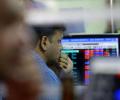
Key benchmark indices Sensex and Nifty declined for the third session in a row on Friday, dropping nearly 1 per cent, dragged by heavy selling in IT, auto and energy stocks. Tariff-related uncertainties amid mixed global market trends also added to the pressure, analysts said. The 30-share BSE Sensex tanked 689.81 points or 0.83 per cent to settle at 82,500.47.
From the Sensex pack, Zomato jumped nearly 5 per cent, followed by Titan which climbed almost 4 per cent. IndusInd Bank, Maruti, Tech Mahindra, Adani Ports, Bharti Airtel and HDFC Bank were also among the gainers.

In an eventful week ahead, stock markets may face volatile trends before the RBI's interest rate decision and the US inflation data announcements, as investors continue to assess the broader implications of US tariffs on global economy and inflation, analysts said. Investors fear that a full-blown trade war will impact global trade and economic growth, according to market experts.

From the Sensex pack, NTPC, Kotak Mahindra Bank, State Bank of India, Tech Mahindra, Power Grid, Bajaj Finserv, Axis Bank, HCL Tech, Reliance Industries and Bajaj Finance were the biggest gainers. Titan, IndusInd Bank, Zomato, Mahindra & Mahindra, Bharti Airtel, Nestle and Infosys were the laggards.

Reels often induce the FOMO-'Act now!' mentality. But sound investing is about consistency, diversification and a long-term horizon.

Nripendra Misra, chairman of the Prime Ministers Museum and Library Society, said the Nehru Memorial Museum was converted to the Prime Minister's Museum because it was felt that the earlier building was not "democratic." Misra said Prime Minister Narendra Modi wanted to ensure an "element of equity" in the treatment of each prime minister at the museum and that it should display the achievements of all prime ministers.

Continuing their massive selling spree for the ninth consecutive month, foreign investors dumped Indian shares worth Rs 50,203 crore in June -- the highest net outflow in over two years -- amid aggressive rate hike by the US Federal Reserve, elevated inflation and relatively higher valuation of domestic equities. Foreign portfolio investors (FPIs) have now pulled out around Rs 2.2 lakh crore from domestic equities in the first six months of 2022 -- the highest-ever net withdrawal by them. Before that, FPIs withdrew Rs 52,987 crore in the entire 2008, data with depositories showed.
From the Sensex pack, Bharti Airtel, Titan, Tata Consultancy Services, Hindustan Unilever, Infosys, Nestle, Reliance Industries, Mahindra & Mahindra, HDFC Bank and Tata Motors were the biggest gainers. However, IndusInd Bank, Bajaj Finance and UltraTech Cement were the laggards.

Equity benchmark indices Sensex and Nifty ended lower on Friday, dragged by auto stocks and relentless foreign fund outflows. Weak US markets and tariff threats also dented investor sentiment. The 30-share BSE benchmark Sensex dropped 424.90 points or 0.56 per cent to settle at 75,311.06.

While demand for sub Rs 50-lakh affordable housing prevails, market players cite increased land rates, escalated construction costs and low margins as key prohibiting factors.

State Bank of India, Tech Mahindra, Larsen & Toubro, Tata Steel, Sun Pharma, Infosys, HCL Tech, Axis Bank, Tata Consultancy Services and NTPC were among the biggest laggards among Sensex shares. Nestle, Hindustan Unilever, Titan, Power Grid, UltraTech Cement and ITC were among the gainers.

IndusInd Bank, Nestle, UltraTech Cement, Mahindra & Mahindra, Power Grid, Asian Paints, Sun Pharma and Tech Mahindra were also among the laggards. Bajaj Finance, Bharti Airtel, ICICI Bank, Adani Ports and HCL Tech were among the gainers.
From the Sensex firms, Tech Mahindra, Tata Steel, Tata Motors, Titan, HDFC Bank, IndusInd Bank, Infosys and Kotak Mahindra Bank were among the biggest laggards. On the other hand, Adani Ports, Mahindra & Mahindra, Power Grid, Eternal and Hindustan Unilever were among the gainers.

All Sensex firms, except Power Grid, ended in the positive territory. Titan, Bajaj Finance, State Bank of India, Larsen & Toubro, Axis Bank, Bajaj Finserv, Asian Paints and Zomato were the biggest gainers.

Foreign investors have withdrawn Rs 22,194 crore from Indian equities this month, driven by expectations of a weak earnings season, a steady rise in the US dollar, and concerns over tariff war during Donald Trump's presidency. This came following an investment of Rs 15,446 crore in the month of December, data with the depositories showed.

From the 30-share pack, Bajaj Finserv, Mahindra & Mahindra, Eternal, Power Grid, ITC, Tata Motors, Asian Paints and Hindustan Unilever were among the gainers. Among the laggards, Kotak Mahindra Bank tanked 4.57 per cent

Continuing its heavy selling spree for the eighth consecutive month, foreign investors pulled out nearly Rs 40,000 crore from the Indian equity market in May on fears of an aggressive rate hike by US Federal Reserve that dented investor sentiments. With this, net outflow by foreign portfolio investors (FPIs) from equities reached at Rs 1.69 lakh crore so far in 2022, data with depositories showed. Going ahead, FPI flows will remain volatile in the emerging markets on account of rising geo-political risk, rising inflation, tightening of monetary policy by central banks, among others, Shrikant Chouhan, Head - Equity Research (Retail), Kotak Securities said.

The Indian equity market valuation has been moving in tandem with the US 10-year treasury yield. While the benchmark US bond yield has witnessed a nearly 70 basis point decline since the end of October this year, dropping from 4.93 per cent to 4.23 per cent on Friday, the Sensex earnings yield has slipped by nearly 45 basis points - from 4.5 per cent to 4.05 per cent. Previously, Indian equities' earnings yields rose in sync with the US bond yields.
Fair trade regulator CCI on Tuesday cleared Bajaj Group's proposed acquisition of a 26 per cent stake each in its insurance joint ventures, Bajaj Allianz General Insurance and Bajaj Allianz Life Insurance, from its partner Allianz SE for a total of Rs 24,180 crore. "The proposed combination involves acquisition of 26 per cent paid-up equity share capital of Bajaj Allianz Life Insurance Company Ltd (BALIC) and Bajaj Allianz General Insurance Company Ltd (BAGIC) by Bajaj Finserv Ltd (BFS), Bajaj Holdings & Investment Ltd (BHIL) and Jamnalal Sons Pvt Ltd (JSPL) from Allianz SE," the regulator said in a release.

India's craft chocolate makers are changing the market by using local cacao, creating bold new flavours, making chocolate both a luxury and a story.

Equity benchmark indices are facing massive corrections, with the NSE Nifty declining over 14 per cent from its lifetime high hit in September last year due to several negative triggers like stretched valuations, foreign fund exodus, disappointing quarterly earnings and rising global trade tensions dragging markets lower. The BSE benchmark Sensex hit its record peak of 85,978.25 on September 27 last year, and the Nifty also reached a lifetime high of 26,277.35 on the same day.

Stock markets will be driven by further developments on the US-China tariff war front along with quarterly earnings announcements from IT majors Wipro and Infosys in a holiday-shortened week, analysts said. Global market trends and trading activity of foreign investors would also dictate market movement this week, experts noted.

From the Sensex shares, IndusInd Bank jumped 7.12 per cent. Axis Bank, Adani Ports, Asian Paints, Bharti Airtel, State Bank of India and ITC were also among the gainers. Maruti, Infosys, Tata Motors, Larsen & Toubro, NTPC and Bajaj Finance were among the laggards.

Indian equity benchmarks rose nearly 2 per cent on Thursday, capping a truncated trading week with their strongest weekly performance in over four years. The rally was sparked by renewed risk-on sentiment following progress in trade negotiations and expanded tariff exemptions.

From the Sensex pack, Nestle India, HCL Technologies, Tech Mahindra, Bharti Airtel, Titan, Infosys, Asian Paints, NTPC, Bajaj Finserv and Sun Pharmaceuticals were among the laggards. State Bank of India, IndusInd Bank, Zomato, Power Grid, ICICI Bank, Tata Motors, Mahindra & Mahindra, Tata Consultancy Services and Adani Ports were the gainers.

Sun Pharma, Tata Steel, State Bank of India, Axis Bank, Tata Motors, Larsen & Toubro and ICICI Bank were also among the Sensex gainers. HCL Tech, UltraTech Cement, Nestle and Hindustan Unilever were among the laggards.
From the 30 Sensex companies, Zomato, Tata Motors, IndusInd Bank, Asian Paints, Bajaj Finance, Maruti Suzuki India, Adani Ports, Hindustan Unilever, Reliance Industries, Bajaj Finserv, UltraTech Cement and Infosys were among the laggards. In contrast, State Bank of India, ICICI Bank, Tata Steel, NTPC, Tata Consultancy Services, PowerGrid, Kotak Mahindra Bank and Sun Pharmaceuticals were the gainers.

Investors should avoid making drastic changes to their asset allocation during a market correction.

Mutual funds (MFs) added systematic investment plan (SIP) accounts at a record pace in 2023 with the net additions in the calendar year surpassing 15 million - 24 per cent higher than the 2022 tally of 12.2 million, according to data from the Association of Mutual Funds in India (Amfi).

Foreign investors have pulled over Rs 6,400 crore from the Indian equity market in the first four trading sessions of the ongoing month when the Reserve Bank of India (RBI) and US Federal Reserve raised interest rates. Given the headwinds in terms of elevated crude prices, inflation, tight monetary policy among others, FPIs' flows in India are expected to remain volatile in the near term, Shrikant Chouhan, Head - Equity Research (Retail), Kotak Securities, said. Foreign Portfolio Investors (FPIs) remained net sellers for seven months to April 2022, withdrawing a massive amount of over Rs 1.65 lakh crore from equities. This was largely on the back of anticipation of a rate hike by the US Federal Reserve and due to the deteriorating geopolitical environment following Russia's invasion of Ukraine.

Equity strategists are basing their expectation on strong corporate earnings recovery, supportive global economic growth, and gradual improvement in business sentiment.

Many high-profile IPOs in India since 2021 have destroyed investor wealth due to overvaluation, weak business models, and post-listing disinterest, turning 1 lakh investments into as little as 3,500.

Housing demand should improve nationwide after the Reserve Bank of India (RBI) cut the repo rate by a larger-than-expected 50 basis points (bps) on Friday, said real estate industry executives. The rate cut comes after housing sales in top Indian cities in the first quarter of 2025 dipped 28 per cent due to skyrocketing residential property prices and geopolitical headwinds, according to Anarock.

Geopolitical developments between India and Pakistan, quarterly earnings and macro data will be the key drivers of stock markets in the holiday-shortened week, say analysts.
Tata Steel was the biggest loser in the Sensex pack, sliding 8.59 per cent, followed by Tata Motors, Larsen & Toubro, Adani Ports, IndusInd Bank, Tech Mahindra, Reliance Industries, Sun Pharmaceutical, HCL Technologies, Tata Consultancy Services, Infosys, and NTPC, were the major laggards. On the other hand, Bajaj Finance, HDFC Bank, Nestle India, ICICI Bank, ITC, Asian Paints and Axis Bank were among the gainers.

'Despite the current uncertainties, the long-term outlook remains constructive due to strong fundamentals, government initiatives, and a stable banking sector.'
